




Introduction to Copper(II) Oxide
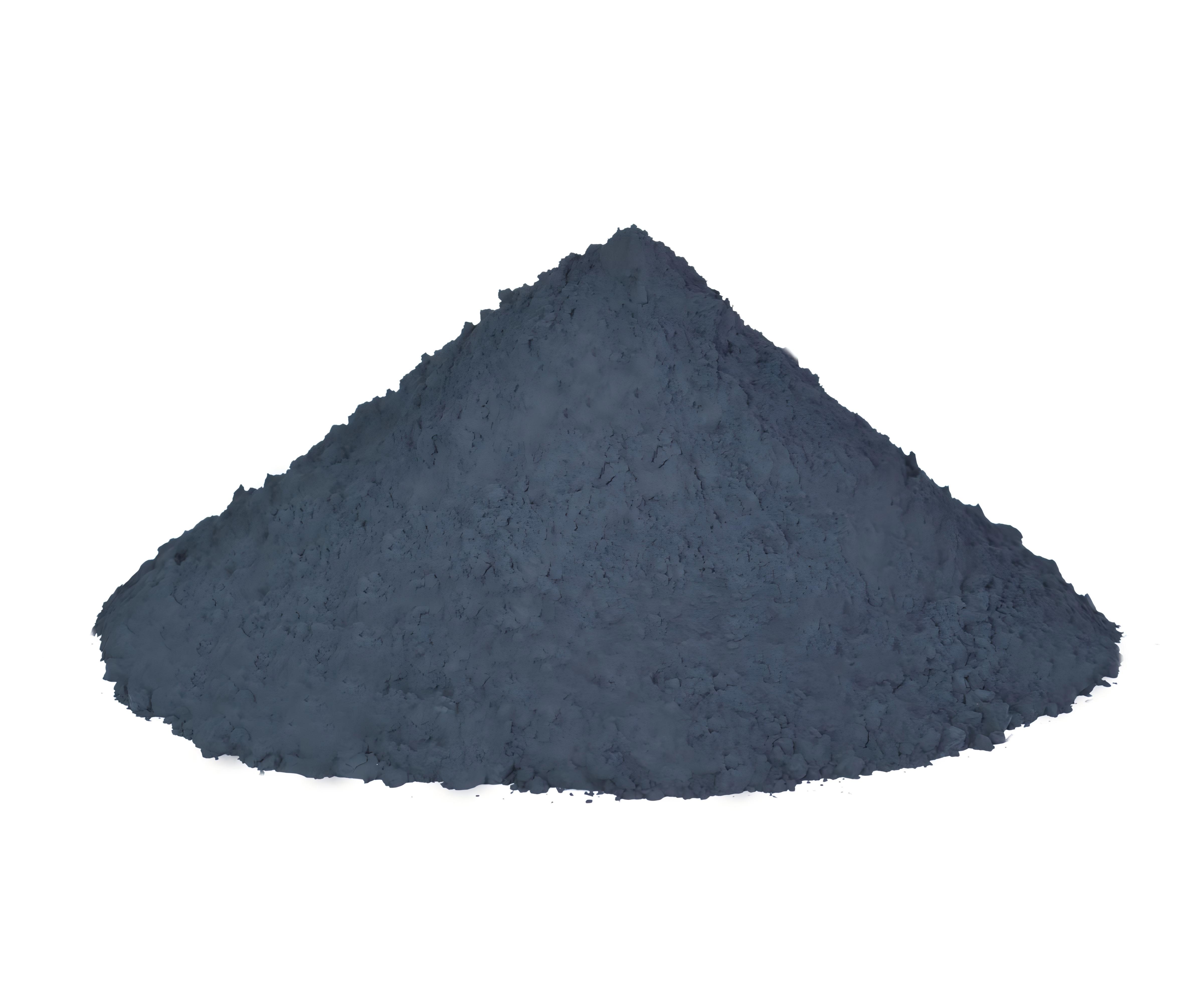
Copper(II) oxide, often referred to as cupric oxide, is a black, inorganic compound with the chemical formula CuO. This material is significant in various industrial and laboratory processes due to its diverse applications, ranging from the production of copper salts to its use in pyrotechnics. This article aims to provide a comprehensive guide on obtaining copper(II) oxide, delving into sourcing raw materials, production processes, alternative synthesis methods, and its chemical interactions. Additionally, we will discuss the applications and safety measures associated with copper(II) oxide, particularly highlighting its relevance in analytical settings.
Sourcing Raw Copper Materials
● Mining and Extraction of Copper Ores
Copper(II) oxide originates from the extraction and processing of copper ores, which are mined from various locations around the globe. Major copper mines include those in Chile, the United States, Peru, and China. These ores typically contain less than 1% copper and undergo extensive treatment to increase the copper concentration. The primary extraction methods include open-pit mining, underground mining, and leaching.
● Overview of Major Copper Mines Globally
Chile's Escondida mine is the world's largest copper mine, producing over a million tons of copper annually. Other notable mines include the Grasberg mine in Indonesia, the Morenci mine in the US, and the Cerro Verde mine in Peru. These mines serve as vital sources of raw copper material necessary for producing copper(II) oxide.
Pyrometallurgical Production Process
● Step-by-Step Explanation
Copper(II) oxide is produced on a large scale via pyrometallurgy, which involves a series of high-temperature processes to extract copper from its ores. Initially, the copper ore undergoes smelting, where it is heated with a reducing agent to remove oxygen. This process yields impure copper, which is further refined through electrolytic refining to obtain pure copper.
Ammonium Carbonate and Ammonia Treatment
● Description of the Aqueous Mixture
In another method, copper ores are treated with an aqueous mixture of ammonium carbonate, ammonia, and oxygen. This treatment facilitates the extraction of copper by forming copper(II) ammine complex carbonates, such as \([ \text{Cu(NH}_3 \text{)}_4 ] \text{CO}_3\).
● Extraction and Separation Processes
Following this treatment, impurities such as iron and lead are removed. The copper carbonate complex is then decomposed with steam to yield copper(II) oxide. The relevant reactions for this process are:
\[ [ \text{Cu(NH}_3 \text{)}_4 ] \text{CO}_3 \rightarrow \text{CuO} + 4 \text{NH}_3 + \text{CO}_2 \]
Decomposition of Copper Carbonates
● Chemical Reaction and Conditions
Another significant production method involves the thermal decomposition of copper carbonates. Basic copper carbonate (\(\text{Cu}_2 (\text{OH})_2 \text{CO}_3\)), when heated, decomposes as follows:
\[ \text{Cu}_2 (\text{OH})_2 \text{CO}_3 \rightarrow 2 \text{CuO} + \text{H}_2 \text{O} + \text{CO}_2 \]
● Importance in Industrial Production
This method is particularly useful in producing copper(II) oxide in laboratory and small-scale industrial settings. The decomposition typically occurs around 180°C, making it a relatively low-energy process.
Alternative Laboratory Synthesis Methods
● Pyrolysis of Copper(II) Nitrate
In laboratory settings, copper(II) oxide can be conveniently prepared by the pyrolysis of copper(II) nitrate (\(\text{Cu(NO}_3\text{)}_2\)). The chemical reaction is as follows:
\[ 2 \text{Cu(NO}_3\text{)}_2 \rightarrow 2 \text{CuO} + 4 \text{NO}_2 + \text{O}_2 \]
This reaction takes place at approximately 180°C and results in the formation of copper(II) oxide and nitrogen dioxide gas.
● Dehydration of Cupric Hydroxide
Another laboratory method involves the dehydration of cupric hydroxide (\(\text{Cu(OH)}_2\)):
\[ \text{Cu(OH)}_2 \rightarrow \text{CuO} + \text{H}_2 \text{O} \]
This reaction requires heating and is a straightforward method for obtaining copper(II) oxide in a laboratory environment.
Chemical Reactions Involving Copper(II) Oxide
● Interaction with Mineral Acids
Copper(II) oxide reacts with mineral acids such as hydrochloric acid (HCl), sulfuric acid (H_2SO_4), and nitric acid (HNO_3) to form the corresponding hydrated copper(II) salts:
\[ \text{CuO} + 2 \text{HCl} \rightarrow \text{CuCl}_2 + \text{H}_2 \text{O} \]
\[ \text{CuO} + \text{H}_2 \text{SO}_4 \rightarrow \text{CuSO}_4 + \text{H}_2 \text{O} \]
\[ \text{CuO} + 2 \text{HNO}_3 \rightarrow \text{Cu(NO}_3\text{)}_2 + \text{H}_2 \text{O} \]
● Formation of Copper Salts
These reactions are essential in the production of various copper salts utilized in different industrial applications, including agriculture, electroplating, and chemical synthesis.
Reduction to Pure Copper Metal
● Use of Hydrogen, Carbon Monoxide, and Carbon
Copper(II) oxide can be reduced to pure copper metal using reducing agents such as hydrogen (H_2), carbon monoxide (CO), and carbon (C). The relevant chemical reactions are:
\[ \text{CuO} + \text{H}_2 \rightarrow \text{Cu} + \text{H}_2 \text{O} \]
\[ \text{CuO} + \text{CO} \rightarrow \text{Cu} + \text{CO}_2 \]
\[ 2 \text{CuO} + \text{C} \rightarrow 2 \text{Cu} + \text{CO}_2 \]
● Processes and Chemical Reactions
These reduction processes are crucial in metallurgical operations for producing high-purity copper from its oxide. They are performed under specific conditions to ensure complete reduction and high yield.
Applications and Uses of Copper(II) Oxide
● Industrial Applications
Copper(II) oxide is a significant product in various industrial applications. It serves as a precursor in the production of many other copper compounds, including copper salts, which are used in agriculture, electroplating, and chemical manufacturing. In ceramics, copper oxide is used as a pigment to produce blue, red, green, and other colored glazes.
● Usage in Pyrotechnics and Other Fields
In pyrotechnics, copper(II) oxide is utilized as a moderate blue coloring agent in blue flame compositions. It provides oxygen and acts as an oxidizer in flash powder formulations with metal fuels like magnesium and aluminum. It is also used in strobe effects and thermite compositions for creating crackling star effects.
Safety and Handling Precautions
● Potential Hazards
Handling copper(II) oxide requires caution due to its potential hazards. It is classified as a hazardous substance and poses risks if inhaled, ingested, or contacted with skin. The material can cause respiratory irritation, skin and eye irritation, and may be harmful if swallowed.
● Safety Measures and Regulations
To ensure safe handling, appropriate personal protective equipment (PPE) such as gloves, masks, and safety goggles should be used. It is crucial to follow Occupational Safety and Health Administration (OSHA) guidelines and local regulations for the safe storage and disposal of copper(II) oxide.
Conclusion
● Copper(II) Oxide in Analytical Settings
Copper(II) oxide powder is a key material used in various analytical applications due to its reactivity and ease of synthesis. Laboratories and industries seeking high-quality copper(II) oxide powder can find reliable sources from manufacturers and suppliers specializing in analytical-grade materials.
● Keywords Inclusion
For analytical purposes, it's important to source copper(II) oxide powder from reputable suppliers. Keywords to consider while searching for such materials include "Copper(Ii) Oxide Powder For Analysis," "Wholesale Copper(II) Oxide Powder For Analysis," "Copper(II) Oxide Powder For Analysis manufacturer," "Copper(II) Oxide Powder For Analysis factory," and "Copper(II) Oxide Powder For Analysis supplier."
About Hongyuan New Materials
Hangzhou Hongyuan New Materials Co., Ltd. (Hangzhou Fuyang Hongyuan Renewable Resources Co., Ltd.) was established in December 2012 and acquired Hangzhou Haoteng Technology Co., Ltd. in December 2018. Located in Xindeng New Area, Fuyang Economic and Technological Development Zone, Hangzhou City, Zhejiang Province, with a total investment of 350 million yuan and a plant area of 50,000 square meters, it is a scientific and technological enterprise integrating research and development, production, and sales of metal powder and copper salt products. At present, the company has 158 employees, including 18 full-time R&D personnel.
Post time: 2024-09-22 17:03:04